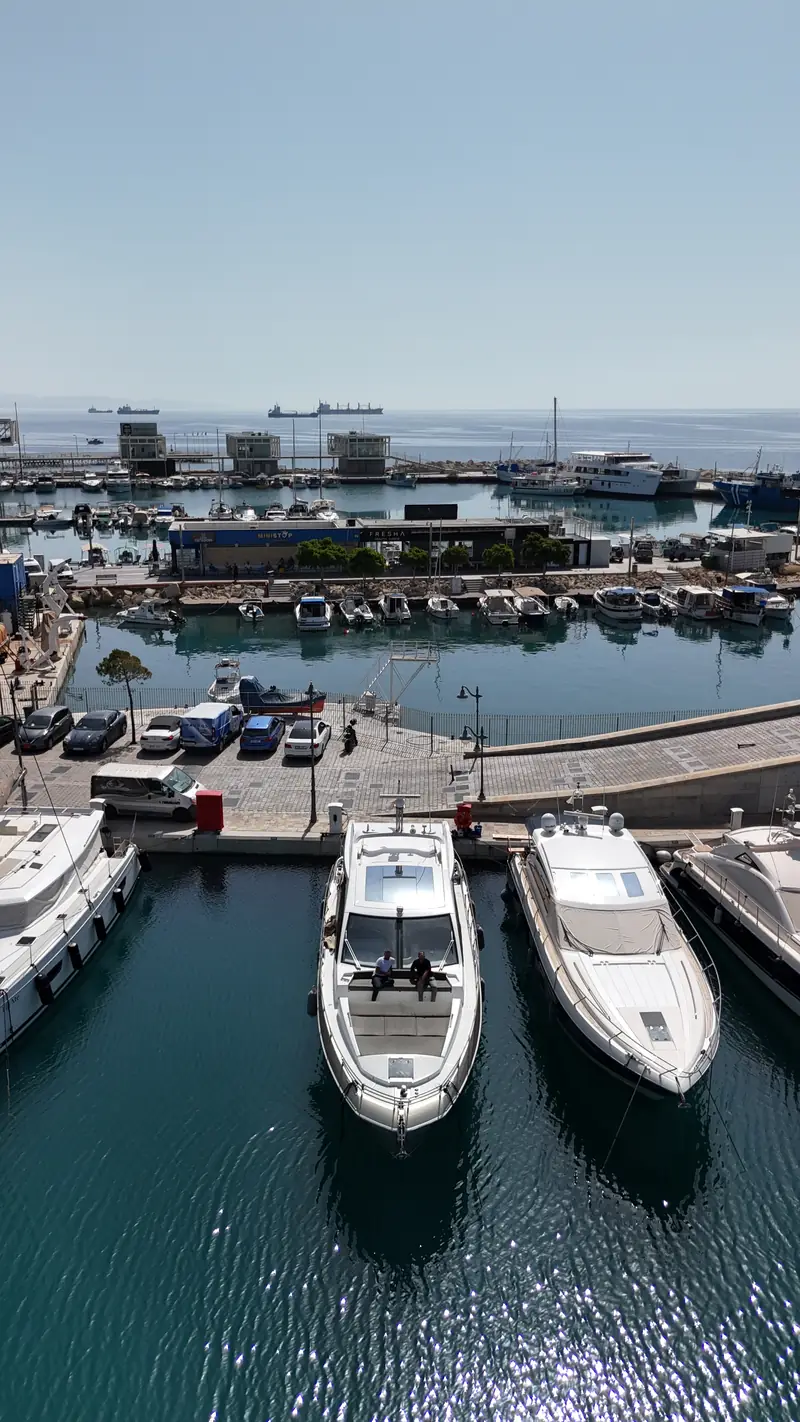
A yacht broker is a professional intermediary who represents buyers or sellers in yacht transactions — handling valuation, market research, negotiation, documentation, and the logistics that most clients never see until something goes wrong.
In Cyprus, the broker's role goes well beyond matchmaking. Transactions here often involve multiple jurisdictions, flag considerations, and marina logistics. A competent broker understands which surveys matter, how to structure a deal under Cypriot maritime law, what the real costs look like beyond the asking price, and how to prevent a six- or seven-figure transaction from unraveling over a missed detail.
I'm a yacht broker based in Cyprus, active in the industry since 2000. Over the years, I've worked across sales, purchases, charters, new builds, and management. The pattern is consistent: clients who involve a broker early save time, avoid expensive mistakes, and make better decisions.
This guide explains what yacht brokerage involves, how it works in Cyprus, and when professional representation is genuinely worth it.
How Yacht Brokerage Actually Works
Yacht brokerage is not a listing service. It's a transaction management process that covers everything from the first conversation to the final handover — and often well beyond.
Every serious transaction starts with clarity on what the client actually needs. For buyers, that means defining the right vessel type, size, specification, and budget before looking at a single listing. For sellers, it means establishing a realistic market valuation and preparing the vessel to compete.
From there, the broker manages the entire lifecycle of the deal: marketing or sourcing, coordinating viewings, qualifying counterparties, handling offers and counteroffers, organizing technical inspections, overseeing legal documentation, and managing the handover logistics.
The scope of a full-service brokerage typically includes:
- Market analysis and yacht valuation
- Professional photography and listing preparation
- Buyer qualification and screening
- Coordinating sea trials and survey inspections
- Negotiation on price, terms, and conditions
- Managing the purchase agreement and escrow
- Liaising with flag state authorities and maritime lawyers
- Overseeing registration, insurance, and handover documentation
- Post-sale support including crew, management, and berth arrangements
Not every broker offers the full range. Some specialize in sales only. Some focus on charter. The real difference is how much of this process the broker takes responsibility for — and how much is left for the client to manage alone.
What a Yacht Broker Does for Buyers
On the buyer side, the work starts long before the first viewing. The first step is always a detailed consultation: how the client intends to use the vessel, where they'll keep it, how often they'll be aboard, who will crew it, and what their real budget is — including running costs, not just the purchase price.
A yacht can look right on paper and still be the wrong vessel in practice. A listing that looks perfect on paper can be wrong for a dozen reasons that only become apparent through experience. Engine hours might be fine for one usage pattern and a red flag for another. A Mediterranean-based yacht that's spent five years in tropical waters has a different maintenance profile. A vessel configured for owner-operator use won't suit a client who plans to hire a captain.
What the buyer's broker manages:
Search and shortlisting. Access to both public listings and private-market inventory. The broker filters based on real suitability, not just specifications.
Pre-screening vessels. Whenever possible, I inspect a yacht before presenting it to a client. Photographs often flatter reality. My job is to filter that out before a client wastes time on the wrong vessel.
Coordinating viewings and sea trials. Scheduling, logistics, travel — and knowing what to look for during each visit.
Survey management. Selecting qualified surveyors, coordinating the inspection timeline, interpreting results, and advising on what findings are deal-breakers versus negotiating points.
Negotiation. Not just price, but terms: what equipment stays, what condition the vessel should be in at handover, warranty provisions on recent work, payment structure, and timeline.
Transaction management. Purchase agreement, escrow, flag state documentation, insurance, registration transfer, and final handover.
Post-purchase support. Berth arrangements, crew hiring, management referrals, maintenance scheduling. The relationship doesn't end when the deal closes.
Where the risks are for buyers:
Buyers most often get hurt by overpaying for a yacht that doesn't suit their intended use, or by underspending on due diligence and discovering problems after closing. In Cyprus specifically, buyers often underestimate the importance of confirming EU VAT-paid status before purchase. A vessel that hasn't cleared VAT within the EU can create a liability that, in some cases, exceeds the yacht's market value.
Another common risk: buying without a survey, or using a surveyor who isn't qualified for the vessel type. I've seen transactions where a buyer commissioned a survey from a generalist inspector, only to discover significant structural issues six months later that a marine-specific surveyor would have caught immediately.
What a Yacht Broker Does for Sellers
Selling a yacht is not the same as listing one. Most of the real work happens between the decision to sell and the signed contract. A broker who simply lists the vessel on a few portals and waits for inquiries is offering a fraction of the service.
What the seller's broker manages:
Market valuation. This is where honesty matters most. An inflated valuation might win the listing, but it costs the owner time and money. Yachts that sit on the market above price develop a reputation — and become harder to sell even after a reduction. The right starting price, based on comparable recent sales and current inventory, is one of the most valuable things a broker provides.
Preparation and presentation. The vessel needs to be in showing condition. Professional photography, detailed specifications, and a listing that accurately represents the yacht's strengths — and doesn't hide its weaknesses. Serious buyers work with their own brokers, and misrepresentation destroys trust immediately.
Marketing and distribution. Placement across the major yacht listing platforms, broker-to-broker networks, targeted outreach to qualified buyers, and in some cases, presence at yacht shows. For higher-value vessels, marketing strategy matters as much as the listing itself.
Buyer screening. Not every inquiry is a real buyer. The broker qualifies interest before the owner invests time in viewings, and manages viewings to present the vessel properly.
Offer management and negotiation. Handling offers, counteroffers, and the psychology of a negotiation that can stretch over weeks. Protecting the seller's interests without killing a viable deal.
Central agency agreement. This document defines the relationship — commission, exclusivity period, marketing commitments, and obligations on both sides. A well-structured central agency agreement protects the seller and sets clear expectations.
Transaction to close. Purchase agreement, escrow coordination, handover inspection, documentation transfer, deregistration from the current flag, and coordination with the buyer's side.
Where the risks are for sellers:
Overpricing is the most frequent mistake. Close behind it: choosing a broker based on who promises the highest number rather than who has a realistic plan to sell. Third is neglecting presentation — a yacht that photographs poorly or shows poorly will attract fewer serious buyers regardless of its quality.
In Cyprus, sellers also need to understand the tax implications of the sale. Depending on the ownership structure, flag registration, and where the transaction is completed, there may be obligations that should be addressed before listing — not after.
How Yacht Brokerage Commission Works in Cyprus
This is one of the most frequently asked questions, and it deserves a straightforward answer.
The standard structure
In Cyprus, as in most international yacht markets, the commission is paid by the seller. It's calculated as a percentage of the final sale price and is agreed before the engagement begins, typically documented in the central agency agreement.
The standard rate across the industry is generally around 10% for vessels valued under approximately €300,000, decreasing to the range of 5–8% for higher-value yachts. For superyachts, commission structures can vary further depending on the complexity of the deal, whether multiple brokers are involved, and the scope of services required.
These are typical ranges, not fixed rates. There is no legally mandated commission percentage in Cyprus. The rate is always negotiable between broker and client.
Who pays what
The seller pays the commission. This is the standard arrangement. The commission is deducted from the sale proceeds at closing.
The buyer typically pays nothing additional. When a buyer engages their own broker, that broker is compensated through a co-brokerage split — a portion of the seller-side commission shared between the listing broker and the buyer's broker. This means using a buyer's broker usually costs the buyer nothing extra.
Most first-time buyers don't realize this: having your own representation in the transaction is, in most cases, free. The cost is already built into the deal structure.
Why do brokers charge commission?
Because the work is substantial. A full-service brokerage engagement involves dozens — sometimes hundreds — of hours of work: market research, travel for inspections, negotiation sessions, legal coordination, administrative processing, and ongoing communication with all parties.
The structure aligns incentives: the broker is paid when the transaction closes, and the outcome still matters. It also means the broker absorbs the risk of deals that fall through — the work gets done regardless of whether the transaction completes.
What the commission actually covers
A commission-based brokerage fee should cover:
- Professional valuation and market analysis
- Marketing, photography, and listing management
- Buyer or vessel sourcing
- All viewings, sea trials, and survey coordination
- Full negotiation service
- Legal and administrative transaction management
- Post-sale handover support
If a broker is charging a standard commission but providing only a listing and occasional communication, the fee isn't justified. Ask what's included before you sign.
When low-fee or no-fee brokerage is misleading
Occasionally, a broker will offer reduced commission or a flat fee to win a listing. Sometimes that is reasonable — a straightforward sale on a correctly priced vessel may require less work.
But in many cases, a lower fee means a thinner service. Marketing is reduced. Viewings are handled loosely. Negotiation becomes reactive rather than strategic.
I've taken over listings from sellers who initially chose the cheapest option and spent months without a serious offer. They didn't save on commission — they lost time, and in some cases, the final sale price was lower than it would have been with proper representation from the start.
The question isn't how much the commission costs. It's what you receive for it.
Understanding the Difference: Broker, Dealer, Manager, and Private Sale
For first-time buyers, confusion usually starts with the terminology. Broker, dealer, manager, and private seller are not interchangeable.
Yacht broker vs. yacht dealer
A broker acts as an intermediary. They represent either the buyer or the seller, facilitating a transaction between two parties. They don't own the inventory.
A dealer typically owns the yachts they sell — usually new vessels from specific manufacturers. They may also accept trade-ins. Dealers offer convenience and often strong brand expertise, but their inventory is limited to what they carry. A broker offers a market-wide view.
In practice, some firms operate as both. The important question is: who does this person represent — me, or their own stock?
Yacht broker vs. private sale
A private sale — buyer dealing directly with seller, no intermediary — can work for straightforward transactions at lower price points. The savings are the commission.
The risks are the gaps. No independent valuation. No qualified negotiation. No survey coordination by someone who knows what to look for. No professional transaction management. And in a cross-border deal, no guidance on flag state requirements, VAT treatment, or documentation.
For vessels above €200,000, or for any transaction involving international registration, I generally recommend professional representation — even if it's just for the legal and administrative side.
Yacht broker vs. yacht manager
A yacht manager handles the ongoing operation of a vessel: crew management, maintenance scheduling, regulatory compliance, budgeting, and sometimes charter management. Their role begins where the broker's typically ends.
Some brokers — myself included — offer management services or work closely with management companies. That continuity matters. The transition from purchase to operation is where many new owners feel least supported.
What a yacht broker does not do
A broker is not a surveyor, a maritime lawyer, a flag state agent, a naval architect, or a financing provider. A good broker coordinates with all of these professionals and knows who to recommend, but they don't replace specialized expertise.
If a broker tells you they can handle everything and you don't need independent legal advice or a qualified survey, that should concern you, not reassure you.
Before, During, and After the Deal: What to Expect
For first-time buyers and sellers, the process often feels opaque. In practice, it usually unfolds like this.
Before the deal
For buyers: Define your requirements with the broker. Budget (including running costs), intended use, preferred size and type, home port, and crewing plans. The broker researches the market, identifies suitable vessels, and schedules viewings.
For sellers: The broker visits the vessel, conducts a market analysis, and provides a valuation. You agree on the asking price, marketing strategy, and commission terms through a central agency agreement. The vessel is prepared for marketing — photography, documentation, and any recommended cosmetic work.
During the deal
Viewings and inspections. The broker coordinates viewings, sea trials, and pre-purchase surveys. Findings are discussed and used to inform the negotiation.
Negotiation. Offers and counteroffers are managed by the broker. Terms are defined: price, payment schedule, included equipment, handover condition, and timeline.
Purchase agreement. Once terms are agreed, a formal purchase agreement is drawn up — usually with input from a maritime lawyer. Escrow is established.
Surveys and conditions. The purchase is typically conditional on survey results. If significant issues are found, the price may be renegotiated, the seller may agree to repairs, or the buyer may withdraw.
After the deal
Closing. Funds are released from escrow. Documentation is transferred. The vessel is re-registered under the new owner's flag if applicable.
Handover. A physical handover occurs — ideally supervised by the broker. The buyer receives all documentation, keys, manuals, and equipment inventories.
Ongoing support. A broker who values the relationship doesn't disappear after closing. Crew referrals, management introductions, berth arrangements, maintenance coordination — these conversations continue.
Why Cyprus Matters as a Yacht Brokerage Hub
Cyprus is not the largest yachting market in the Mediterranean. It doesn't have the marina capacity of the Côte d'Azur, the shipyard infrastructure of Italy, or the regulatory simplicity of some Caribbean flags.
But it has strategic advantages that are increasingly relevant — particularly for clients in the eastern Mediterranean, the Middle East, and the former CIS region.
Geographic position
Cyprus sits at the crossroads of three continents. It's a natural base for cruising the eastern Mediterranean — Greece, Turkey, Lebanon, Egypt, and Israel are all within reasonable range. For clients who want a Mediterranean lifestyle without the overcrowding of the western Med, Cyprus offers something different.
EU membership and flag state benefits
Cyprus is an EU member state with a well-regarded maritime registry. Registering under the Cyprus flag provides access to EU waters without the complications of operating a third-country flag within the EU. For owners who want a European flag on a Mediterranean-based vessel, it's a competitive option.
Tax and corporate structure
Cyprus offers certain tax efficiencies that can be relevant to yacht ownership — particularly for clients structuring ownership through corporate entities. The specifics depend on individual circumstances and should always be discussed with a qualified tax advisor, but the framework is one reason many international owners choose Cyprus as their base.
An evolving marina infrastructure
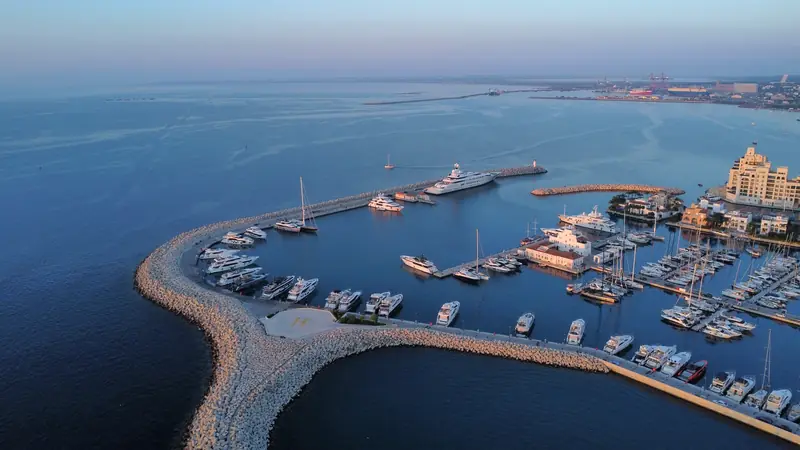
The marina landscape is developing. Limassol Marina is the flagship — full-service, centrally located, with residential and commercial facilities alongside the berths. Ayia Napa Marina has added modern capacity in the east. Larnaca is undergoing redevelopment that will significantly expand its offering. Smaller marinas like Latchi, Zygi, and St. Raphael serve niche segments.
That creates a different kind of market. Berth availability is tighter than in larger hubs, but the owner community is also more stable and less transient.
Who benefits most from Cyprus-based brokerage
Expats relocating to Cyprus who want to explore yacht ownership as part of their lifestyle transition. They need a broker who understands both the market and the adjustment process.
Eastern Mediterranean-focused owners who want a home port with good access to Greece, Turkey, and the Levant without the distance and expense of basing in the western Med.
International buyers looking for EU flag registration combined with a broker who can manage the purchase, registration, and ongoing operations from a single base.
Business owners based in Cyprus exploring yacht ownership as a lifestyle investment or corporate entertainment tool.
What expats often misunderstand
Most expats assume the Cyprus market works the way things work wherever they're coming from. It doesn't. Processes take longer than in some northern European markets. Marina berth availability is limited. The regulatory framework has its own specifics. And the service provider landscape — surveyors, shipyards, crew agencies — is smaller, which means local knowledge matters more, not less.
Clients who arrive expecting the infrastructure of Antibes or Palma will adjust their expectations. Clients who arrive expecting a smaller, more personal, and strategically positioned market will find exactly what they're looking for.
When another jurisdiction might be better
Cyprus is a strong base for many clients, but it's not the right answer for every situation.
If you're primarily cruising the western Mediterranean and rarely venture east, basing in Spain, France, or Italy may be more practical.
If your vessel requires major refit work, you'll likely need to travel to a shipyard in Turkey, Greece, or Italy — Cyprus doesn't have that infrastructure at scale.
If your ownership structure is centered in a non-EU jurisdiction and you have no connection to Cyprus, there may be simpler flag options.
A good broker helps you make the right decision for your situation — even when that decision isn't to base in their home market.
Common Mistakes When Entering the Yacht Market
These are patterns I see repeatedly. None of them are inevitable.
Skipping the survey. The most expensive mistake in yacht buying. A pre-purchase survey costs a fraction of the vessel's price and reveals problems that can save you tens or hundreds of thousands.
Choosing a broker based on commission alone. The cheapest broker is rarely the best value. What matters is what you receive for the fee — and what problems are prevented.
Not confirming VAT status before purchase. In the EU, this is non-negotiable. If the vessel hasn't been VAT-paid, the buyer may face a substantial tax bill. This should be established and documented before any offer is made.
Buying based on photos and specifications without viewing. Listings are marketing materials. They show the best angles, the best light, and sometimes a version of the vessel that no longer exists. View in person. Inspect in person.
Ignoring running costs. The purchase price is the beginning, not the end. Berth fees, insurance, maintenance, crew, fuel, and annual compliance costs can equal 10–15% of the vessel's value per year. Budget for this from the start.
Negotiating without professional representation. In a transaction where the seller has a broker and the buyer doesn't, the buyer is at a structural disadvantage. The seller's broker represents the seller's interests — that's their job.
Rushing to close. Time pressure in a yacht transaction is almost always artificial. If someone is pushing you to close faster than you're comfortable with, that's a reason to slow down, not speed up.
Common Questions About Yacht Brokerage in Cyprus
What exactly does a yacht broker do?
A yacht broker manages the full process of buying, selling, or chartering a yacht — from market analysis and valuation through negotiation, surveys, documentation, and handover. In Cyprus, this also includes navigating local maritime regulations and flag state requirements.
How much does a yacht broker charge in Cyprus?
Commission typically ranges from 5% to 10% of the sale price, depending on the vessel's value and the complexity of the transaction. The seller usually pays the commission. Buyer representation is typically covered through a co-brokerage split at no additional cost to the buyer. Rates are always negotiable and should be agreed in writing before the engagement begins.
Do I need a broker to buy a yacht in Cyprus?
You are not legally required to use a broker. However, for transactions above €200,000, cross-border purchases, or situations involving flag registration and VAT compliance, professional representation significantly reduces risk and complexity.
What is the difference between a yacht broker and a yacht dealer?
A broker acts as an intermediary between buyer and seller, representing one party's interests. A dealer typically owns inventory and sells from their own stock. Brokers generally offer a wider market view and independent advisory, while dealers may offer convenience for specific brands.
How long does it take to buy a yacht through a broker in Cyprus?
A straightforward purchase of a listed vessel might close in four to eight weeks. Complex transactions involving surveys, negotiations, flag transfers, and financing can take three to six months. New build oversight extends to twelve months or more depending on the shipyard.
Can a yacht broker help with charter arrangements?
Yes. Many brokers, including myself, offer charter services — both for owners who want to generate income from their vessel and for clients looking to charter before committing to ownership. Charter management involves its own regulatory and operational requirements in Cyprus.
What should I ask a yacht broker before hiring them?
Ask about their experience with your transaction type, their knowledge of the Cyprus market, their commission structure, how they handle surveys and negotiations, and whether they can provide references from recent clients.
Is it worth using a broker for a yacht under €100,000?
For smaller transactions, the value of a broker depends on your experience level. If you know the market, understand surveys, and can handle documentation independently, you may not need one. If it is your first purchase, even at a lower price point, professional guidance can still prevent expensive mistakes.
Why is Cyprus a good base for yacht ownership?
Cyprus offers EU flag registration, strategic eastern Mediterranean positioning, an evolving marina infrastructure, and a business-friendly regulatory environment. It suits owners who cruise the eastern Mediterranean and want an EU base that is more practical and less congested than many western Med alternatives.
What does a yacht broker NOT do?
A broker is not a surveyor, maritime lawyer, naval architect, or financing provider. A good broker coordinates with all of these specialists and recommends qualified professionals, but does not replace their independent expertise.
Final Thought
Yacht brokerage exists because buying or selling a yacht is more complex than it first appears — and the cost of getting it wrong can be significant.
A good broker doesn't just find you a boat. They protect your interests, manage the details you didn't know existed, and make sure the transaction closes properly.
If you’re considering a yacht purchase or sale in Cyprus, I’m happy to talk through what the process would look like in your case. No pressure and no sales script — just a clear view of what is involved and whether professional representation would add value.
— Anestis