Secondary keywords: boat rental services Cyprus, cost to hire a yacht for a day, yacht charter for beginners
Long-tail queries: What is the first step to renting a yacht, Do I need a licence to rent a yacht, What is the difference between renting and chartering
Renting a yacht looks more complicated than it is. People put off their first charter because they do not know where to start or what they will be asked. In reality the whole thing is five steps, and the first one is not about the boat.
Step 1. Decide what you want from the day
This is the only step that needs real thought. The rest is mechanics.
Answer three questions:
- How many of you, and who. Six adults and six people including three children are different boats.
- How long. Half a day, a day, a weekend or a week. That decides the type of vessel and where you leave from.
- What for. Swimming and lying at anchor, sailing, marking an occasion, or showing guests the coast. Four different scenarios.
Everything else follows. If you come to me with those three answers, choosing the boat takes one conversation.
Step 2. Crewed or bareboat
Crewed. A captain aboard, sometimes a steward or a chef. You do not drive and you are not responsible for the vessel. This is the default for a first charter and for any trip where the point is to relax.
Bareboat. You take the boat and skipper it yourself. Cheaper, but it needs a licence and proven experience. Companies check documents seriously, not as a formality: insurance will not cover what happens to a vessel under an unqualified skipper.
In between — bareboat with a skipper for the first day. That is what experienced sailors do when they do not know local waters.
A note on words: "renting" and "chartering" mean the same thing here. Charter is simply the industry's term.
Step 3. The licence question
Short version: for a crewed charter you need no licence at all. A professional runs the boat.
For bareboat you do. Cyprus accepts internationally recognised certificates, and companies almost always ask for evidence of practical experience on top: where you have sailed, on what, and how much. Sometimes they ask for a second competent person aboard.
The exact list depends on the company and the vessel, so the only reliable answer is to confirm before booking, not on departure day. If you are unsure whether your certificate qualifies, send it to me and I will tell you plainly.
Step 4. Understand what the price really includes
The charter fee almost never includes everything. Ask about these separately:
- Fuel. Often charged on consumption. Significant on a motor yacht, minor on a sailing boat.
- Crew. Sometimes in the rate, sometimes on top.
- Food and drink. Usually extra. Sometimes you can bring your own.
- Berthing fees in other marinas if the route includes overnight stops.
- Security deposit for bareboat — refundable, but the sum has to be blocked.
- Cleaning after the trip.
I am not quoting figures here on purpose. Rates depend on the vessel, the season, the duration and the crew, and any number in an article is out of date before the page reaches search. The seasonal effect is covered in the catamaran guide and the crewed-charter piece from Paphos.
The one thing worth remembering about money: compare totals, not rates. The boat that looks cheaper on a website is sometimes dearer after fuel and fees.
Step 5. Book, and prepare
Booking is confirmed dates, a deposit and a contract. Read two clauses in it: what happens in bad weather, and what happens if you cancel. Everything else is usually standard.
Before you go:
- Documents, if the charter is bareboat.
- Light-soled, non-marking shoes. Dark soles leave marks, and that sometimes comes out of the deposit.
- A hat and sunscreen. The sun at sea is different from the sun on shore.
- Seasickness tablets if you are not sure. Take them beforehand, not once you feel ill.
- A warm layer for the evening, even in summer.
What not to bring: hard suitcases. There is nowhere to put them on a boat.
Where to leave from
Cyprus has several departure points, and they are not interchangeable.
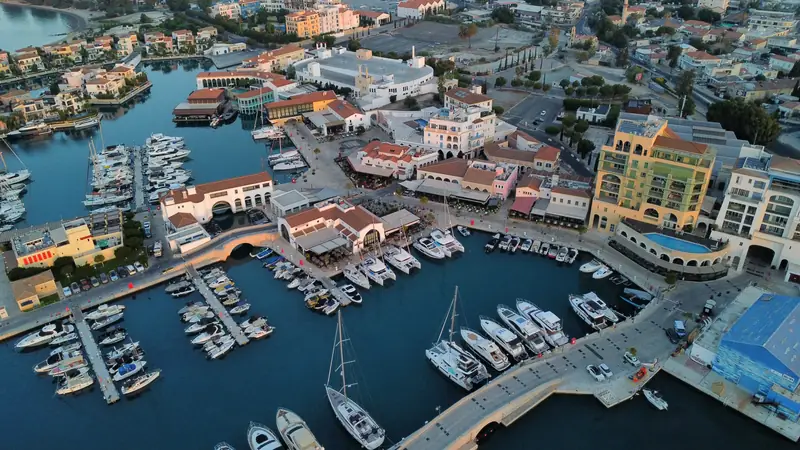
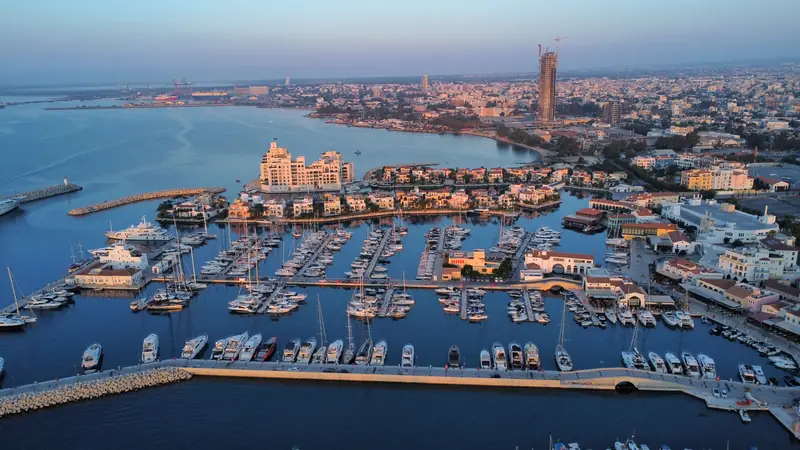
- Limassol — the most boats and the widest choice. My home port.
- Larnaca — convenient if you land and want to be on the water the same day.
- Paphos and Latchi — the way to the Akamas and the Blue Lagoon. For a family day this is the most beautiful stretch of the island.
- Ayia Napa — clear water and sea caves, but crowded in summer.
The port is usually chosen by the route, not by where you are staying: an hour by car across Cyprus costs nothing, and the difference in route can be everything.
Frequently asked
What is the first step? Know your group, your duration and your purpose. With those, choosing a boat takes one conversation.
Do I need a licence? For a crewed charter, no. For bareboat, yes, plus proof of experience.
Can I rent for a single day? Yes. Day charters are the most common format in Cyprus.
What if the weather turns? The contract should include a rescheduling clause. It is normal practice, and it works — charters are rarely cancelled here, but the rule exists.
Can I bring children? Yes. Tell me their ages in advance: the boat, the route and the lifejacket sizes are chosen around them.
If it is easier to ask
Tell me how many of you, for how long and what you want to do. I will suggest options and tell you honestly if a charter is not the right answer for your plan.